

It’s 7:45 a.m. You’re “doing everything right,” but your day still starts in a driveway—coffee in one hand, keys in the other, and a five-minute drive to… almost everything.
Now picture the same morning in a different city: you walk your kid to school, cut through a small park, grab groceries on the way back, and your step count quietly climbs without you “finding time” for it.
Every year, new lists try to answer the same question: which cities are the most active? The problem is that “active” can mean a lot of different things. It can mean health outcomes, daily movement opportunities, the quality of bike networks, or how easy it is to walk to work without feeling unsafe.
That’s why city rankings often feel contradictory. One list rewards parks and preventative care. Another rewards sports access and affordability. Another focuses almost entirely on whether biking feels safe and practical.
If you’re comparing places to live, travel, or invest in, these differences matter. A city can look “fit” on paper and still make everyday movement inconvenient. Or it can rank modestly overall but quietly make walking and biking the easiest option for normal errands.
A helpful way to read these rankings is to treat them as lenses—then ask what the built environment is likely to do to your daily behavior. In coverage of a natural experiment using smartphone step data, people who moved from low-walkability cities to high-walkability cities increased walking by about ~1,100 steps per day on average—roughly ~7,700 extra steps per week—without anyone prescribing a new workout plan, as described in this report on moving to a more walkable city and step counts from Lifespan.io. (Step length varies, so that conversion is best read as intuitive, not a precise distance.)
In 2026, “most active” isn’t just about who tries harder. It’s about which cities make movement the path of least resistance.
What “most active” means in this article
Think of a city like a daily-life treadmill set to a certain incline. You can still choose how much you move—but the built environment sets the default.
Instead of claiming there’s one perfect ranking, this article uses three complementary scorecards:
- Community fitness conditions and outcomes in the 2025 American Fitness Index city rankings published by the American College of Sports Medicine.
- Active-lifestyle conditions and affordability drawn from WalletHub’s Best Cities for an Active Lifestyle (2026), as summarized in this Drug Store News report on the 2026 list.
- Bike network quality and comfort from the PeopleForBikes City Ratings (2025) available in the PeopleForBikes ratings dashboard.
2026’s most active cities: where multiple lists overlap
When you compare these lenses, some places show up repeatedly because they combine opportunity, infrastructure, and culture in ways that make movement feel normal.
The cities below are discussed as a “consensus tier” in the practical sense that they appear near the top across the ACSM and WalletHub lists and are also strong in PeopleForBikes network ratings where applicable.
Consensus tier: cities that keep showing up
San Francisco, CA
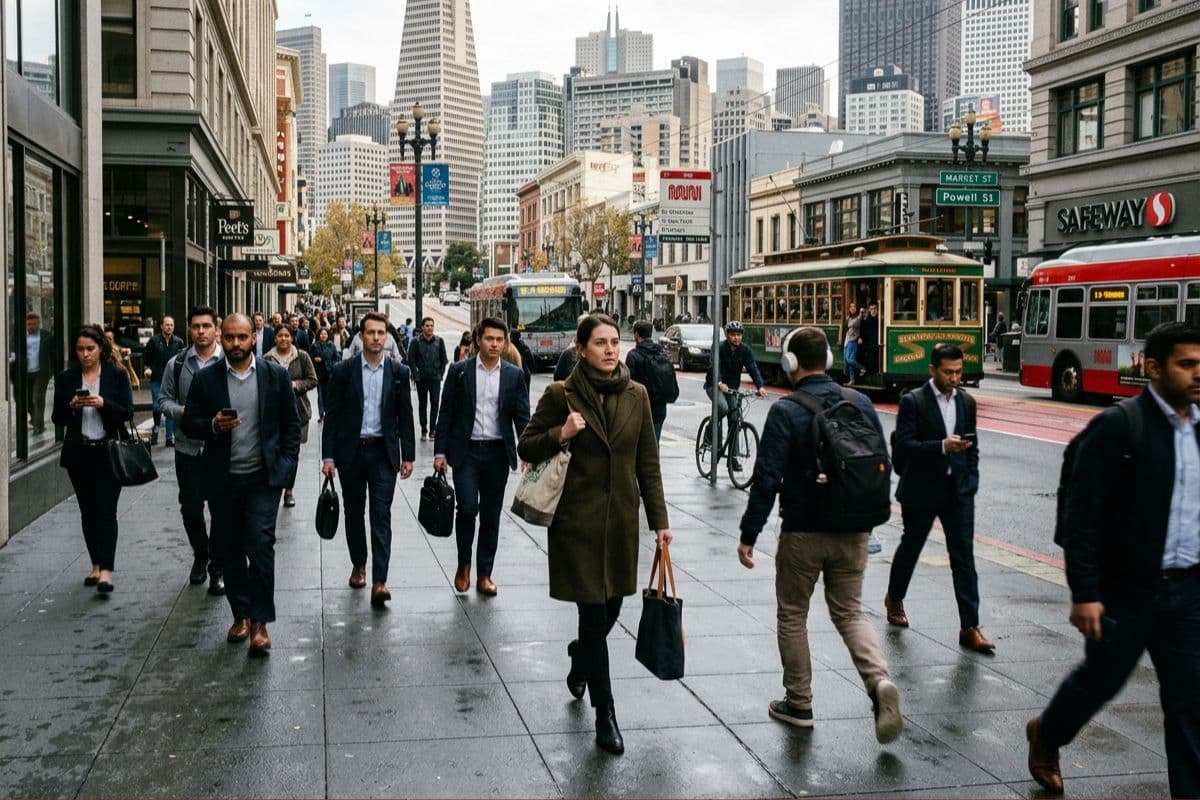
San Francisco places highly in ACSM’s top 10 and also appears in WalletHub’s top 10, and it performs strongly as a large city in the PeopleForBikes network ratings. In day-to-day terms, that combination often aligns with shorter trips, a stronger walking-and-transit pattern, and biking that can work for ordinary errands—not just weekend rides.
Denver, CO
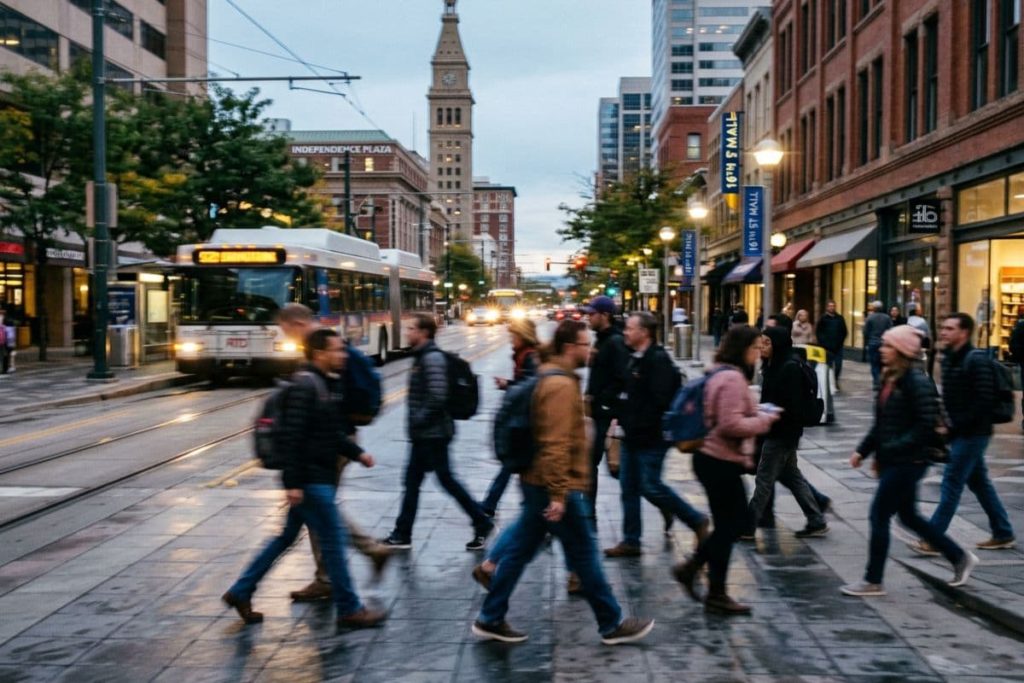
Denver appears in ACSM’s top 10 and WalletHub’s top 10. It’s often cited as a place where outdoor access and local habits can support regular recreation, alongside neighborhoods where active transportation is a practical option.
Madison, WI
Madison appears in ACSM’s top 10 and WalletHub’s top 10. Its smaller scale can translate into more short trips and more “I’ll just walk” moments, depending on neighborhood and season.
Atlanta, GA
Atlanta appears in ACSM’s top 10 and WalletHub’s top 10. It’s also a useful reminder that a metro can score well on broad health-and-fitness indicators while still varying dramatically by neighborhood when it comes to walkability and day-to-day access.
Strong on one list, worth a nuanced read
Arlington, VA and Washington, DC
In ACSM’s 2025 rankings, Arlington is #1 and Washington, DC is #2, and PeopleForBikes rates DC among stronger large-city bike networks. Practically, that often reflects “daily-life activity scaffolding”: sidewalks, parks, transit-linked walking, and compact job centers.
New York, NY
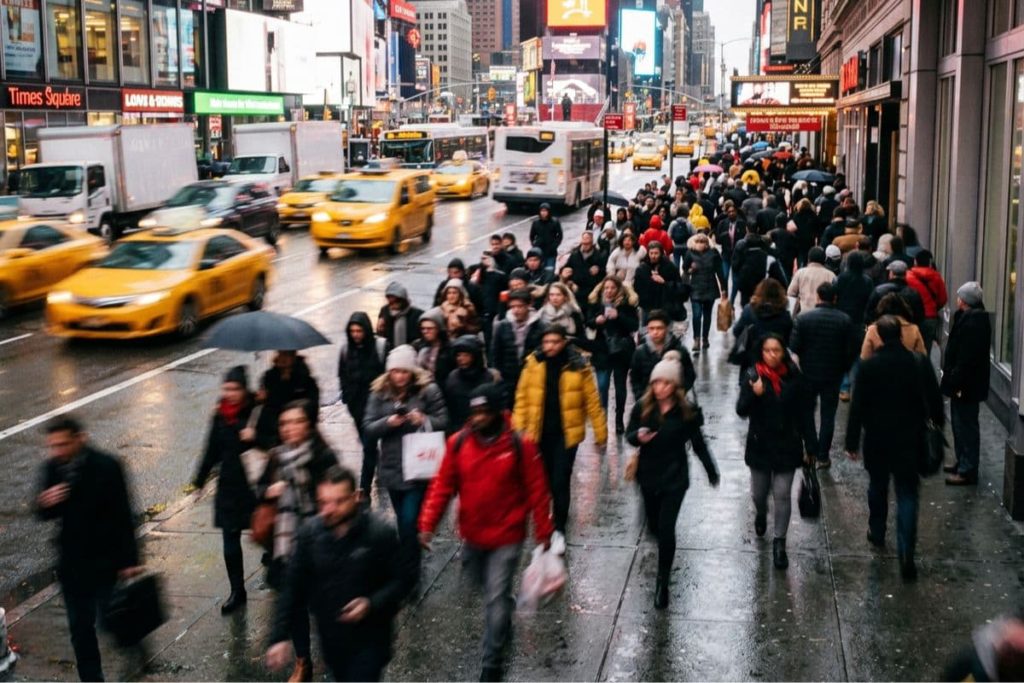
New York ranks #2 on WalletHub’s 2026 list, and PeopleForBikes now rates New York City by borough, with Brooklyn appearing as the top large-city rating. It’s also frequently used as an intuitive example in discussions of how walkability can change behavior, including the same step-count coverage referenced earlier.
Minneapolis, MN and Seattle, WA
Both Minneapolis and Seattle sit in ACSM’s top 10 and both rate strongly in PeopleForBikes large-city network quality. A key takeaway is that in these places, biking is more likely to function as transportation for some residents—not only recreation—because the network is more connected and comfortable.
Honolulu, HI
Honolulu ranks #1 on WalletHub’s 2026 list. It may not align perfectly with ACSM’s top because each index emphasizes different factors, and that mismatch is precisely why reading across multiple lenses can be more useful than relying on a single “winner.”
2026’s least active cities: where headwinds stack up
Low activity doesn’t mean residents are “lazy.” More often, it means the city is asking people to overcome more friction—longer distances between basics, fewer comfortable sidewalks, more dangerous crossings, fewer low-stress biking routes, or conditions that make outdoor movement feel punishing.
On the lower end of the ACSM 2025 rankings, as shown in the ACSM American Fitness Index 2025 city list, are:
- Oklahoma City, OK
- Lubbock, TX
- North Las Vegas, NV
- Memphis, TN
- Wichita, KS
- Detroit, MI
- San Antonio, TX
- Port St. Lucie, FL
- Indianapolis, IN
- Bakersfield, CA
WalletHub’s 2026 results are widely circulated for top performers, but shorter news summaries don’t always display a complete bottom-city table. The safest reader takeaway is to treat the WalletHub summary as a clear view of who ranks highly, not as definitive evidence of a “bottom 10,” as reflected in the Drug Store News coverage of the WalletHub 2026 ranking.
The larger editorial point is simple: “least active” cities tend to be places where even highly motivated people have to schedule movement like an appointment.
Active commuting is a different world depending on the city
“Do people walk to work?” is one of the clearest signals that the environment supports daily movement—because commuting is repetitive, time-bound, and not always optional.
For a directional look at how widely pedestrian commuting can vary by city, a commonly referenced starting place is the Wikipedia list of U.S. cities with the most pedestrian commuters. This type of compilation is best read as an index to underlying sources rather than a final authority, but it’s useful for illustrating just how different “normal commuting movement” can be across U.S. cities.
Why comparisons still feel weird: the pandemic step shock
City-to-city comparisons can also feel strange because daily routines are still influenced by pandemic-era behavior change.
A global study using smartphone step counts found daily steps dropped sharply early in the pandemic, with recovery remaining incomplete over the observed timeline, as reported in this peer-reviewed COVID-era step-count analysis hosted by the National Library of Medicine. The practical implication is that even cities with strong “bones” may show uneven patterns on the ground as habits continue to stabilize.
The simplest takeaway (and a checklist you can actually use)
The step-count effect is worth returning to because it reframes the whole conversation: in the natural experiment coverage referenced earlier, moving to a more walkable city was associated with about ~1,100 extra steps per day on average—an environment effect more than a motivation hack.
If you’re evaluating any city—whether you’re relocating, traveling, or considering investment—use a checklist that maps to the three lenses above:
- Walkability for errands: Can you reach basics on foot in 10–15 minutes, and does the city support that kind of daily life in practice?
- Bike network comfort: Are there connected, low-stress routes where a cautious rider would feel comfortable using the bike for ordinary trips?
- Transit access: Does transit exist in a way that reliably adds walking rather than friction and stress?
- Climate and air quality constraints: How often do conditions make outdoor movement a bad trade?
And if you’re reading rankings for different purposes, keep the lenses clear: ACSM is strongest for broad community fitness conditions and outcomes, WalletHub emphasizes an “active lifestyle” scoreboard with cost and access considerations, and PeopleForBikes is the clearest guide to whether biking is likely to feel connected and comfortable.
You don’t have to become a different person to move more. Often, you just need a place that makes movement easier to choose—one ordinary trip at a time.